Everyone can see where every job is, without asking three people.
A tree-care company in North Vancouver runs its jobs through Jobber, a crew group chat and the documents the crew produces on site. We built them one record per job that knows all fourteen stages, and a board of every open job by stage, with what is waiting on whom. In daily use since October 2026.
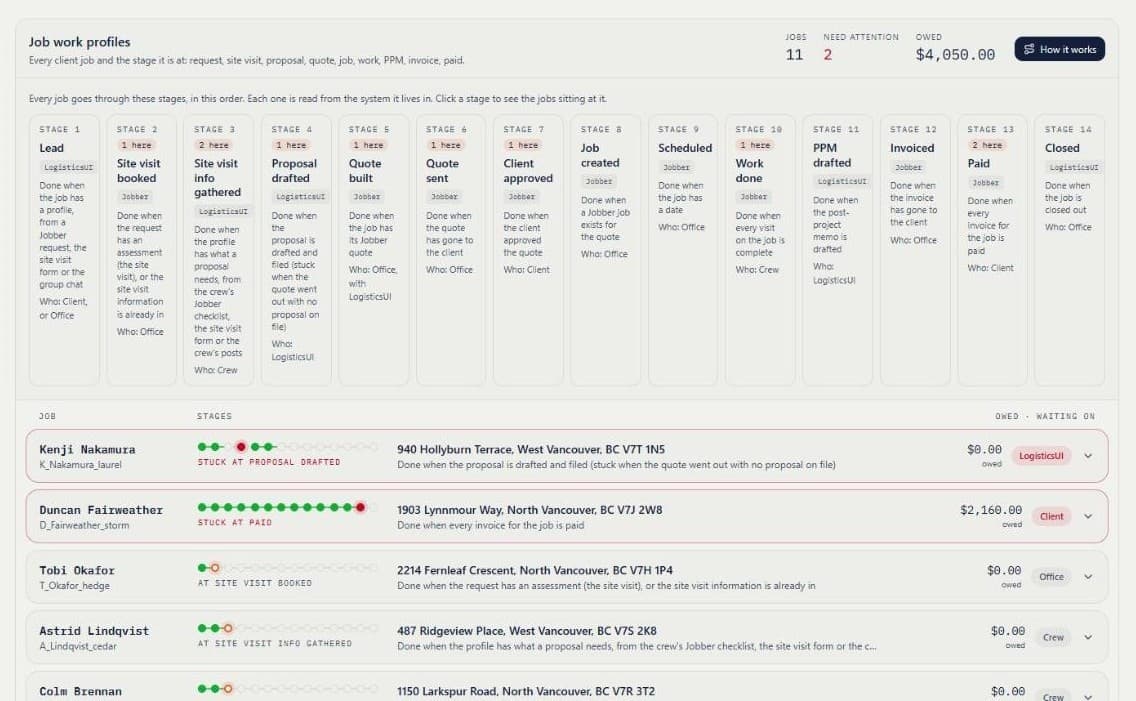
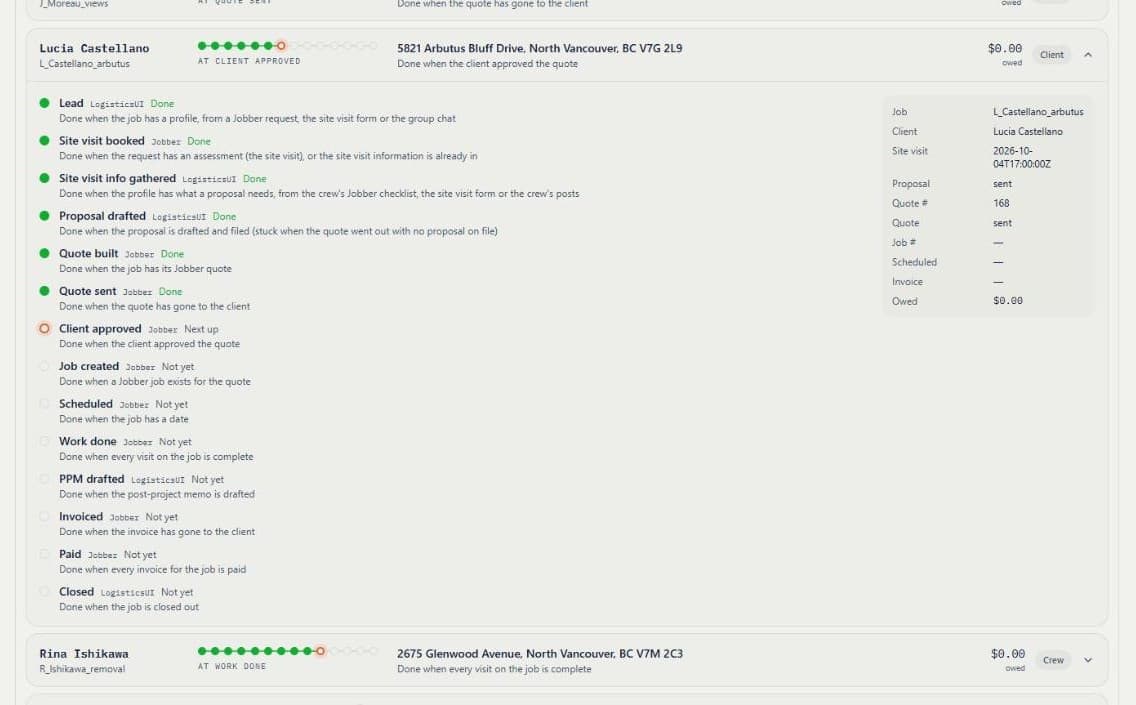
Fourteen stages, one record per job, nobody types a status: each stage is proved by a fact read from where it lives, a Jobber status, a message in the chat, a document Lui made.
- Customer
- A tree-care company, North Vancouver, BC
- What was built
- One record per job across 14 stages, a board, the quote, the job, the invoice and the post-job report from one record
- Runs on
- Jobber, WhatsApp, Google Drive
- Status
- In daily use since October 2026
- Systems
 WhatsApp
 Google Drive
The problem: fourteen stages, three systems, and nobody could say where a job was
Between a customer's first message and the closed job there are fourteen stages: the lead, the site visit booked, the site visit information gathered, the proposal, the quote built and sent, the client's approval, the job created and scheduled, the work done, the post-job memo, the invoice, the payment, the close. They lived in Jobber, in the crew's group chat, and in the documents the crew made on site. "Where is the Castellano job?" meant asking three people and scrolling a chat.
What we built: one record per job that proves each stage from where the fact lives
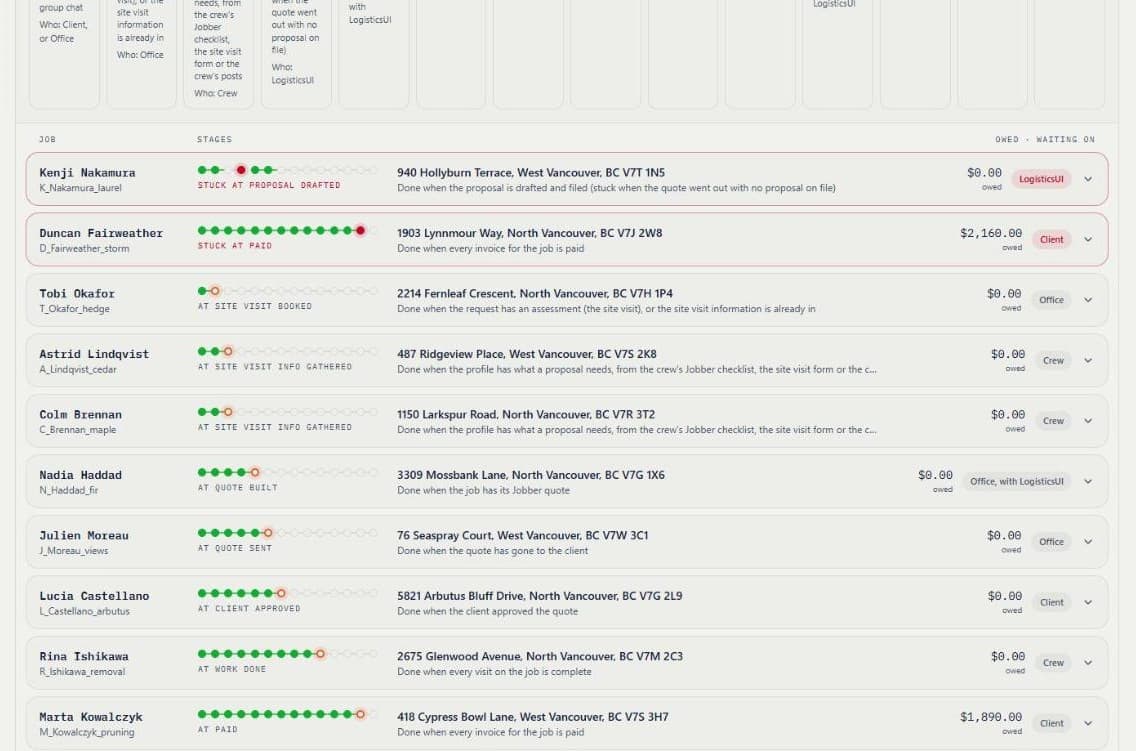
A record per job that knows every stage and, for each, the one fact that proves it is done: a Jobber status, a message in the chat, a document Lui made. Nobody types a status. A board of every open job by stage, with what is waiting on whom and the next thing to do. The quote, the job, the invoice and the post-job report are produced from the same record, so the numbers agree.
Want one like this on your own systems?
What changed: the question is answered by looking, and the documents agree
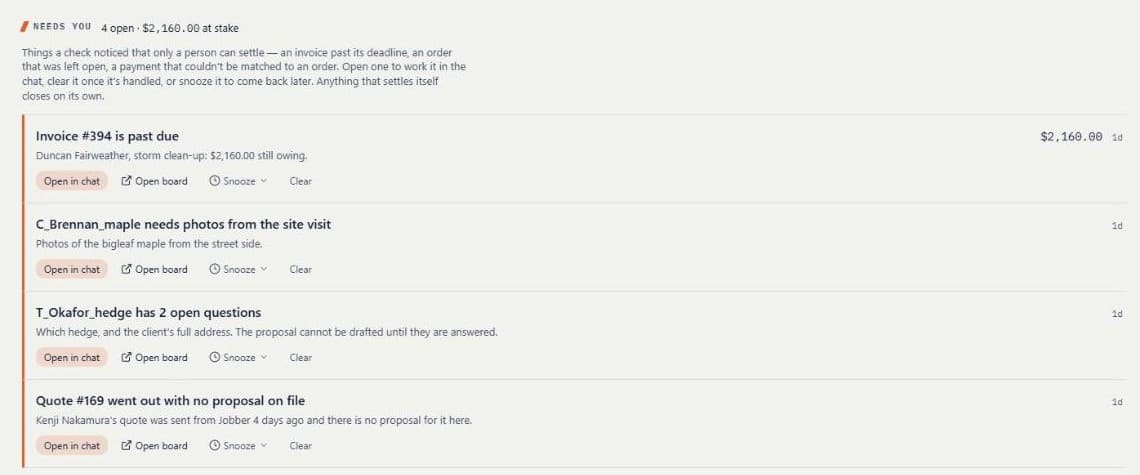
Where is the Castellano job? is answered by looking at the board. The stage is right because it is read from the thing that proves it, not from what somebody remembered to update. A quote that went out and got no answer raises itself. The invoice and the post-job report come from the same record as the quote, so the numbers match without anyone checking.
This build has no before-and-after number on this page because the customer is not named, and a number without an owner is not one we print. Its status line is the claim: in daily use since October 2026.
In daily use at a Jobber-run tree-care company in North Vancouver since October 2026. The screens below are the real board running on invented jobs.
The same build for your jobs
If your work has stages and the facts about each stage live in different places, the shape is the same: one record per job, each stage proved by a fact read from where it lives, a board by stage, and the documents produced from the record. It runs inside your LogisticsUI account on the systems you have already connected; Jobber, a group chat and Google Drive here, your own set elsewhere.
Questions about this build
Does anyone type a status?
No. Each stage is proved by a fact Lui reads from where it lives: a status in Jobber, a message in the group chat, a document it made. A stage without its fact is not done.
What if a stage has no system behind it?
Then it is a list: the record says what is waiting and on whom, and a person says when it is done. The build does not invent a system for a step that does not have one.
Does it replace Jobber?
No. Jobber stays the system of record for clients, quotes, jobs and invoices. The record reads from it and writes to it through Jobber's own API.
How long did it take?
Weeks, built with the customer on their real jobs, with the first version on their data rather than a mock-up.